Blog Copywriting for Locksmiths: Turn Website Visitors Into Service Calls
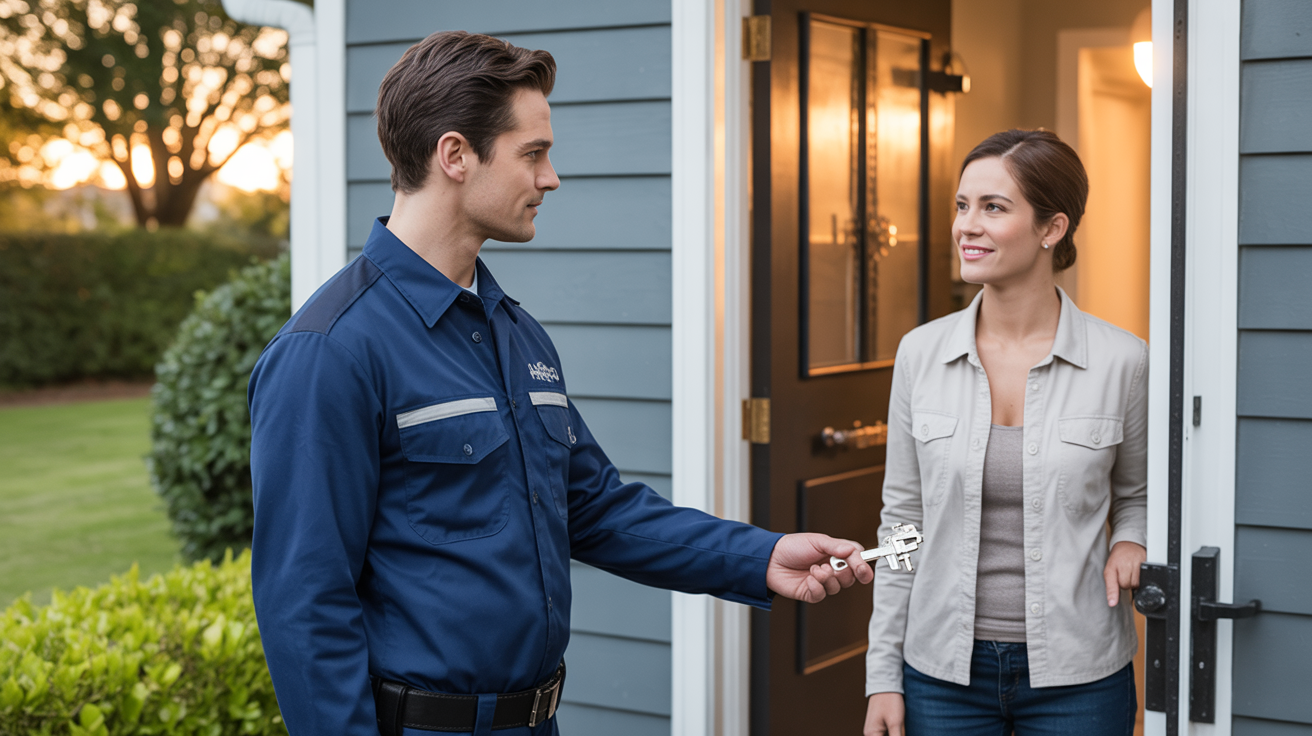
You’re the person people call when they’re locked out, vulnerable, and stressed. You show up quickly, solve the problem professionally, and charge fairly.
But your website looks like every other locksmith—including the scammers.
“24/7 Emergency Service.” “Licensed and Insured.” “Fast Response Time.” These phrases appear on every locksmith website, including the bait-and-switch operations that give the industry a bad name.
Here’s the challenge: the locksmith industry has serious trust problems. Scammers use fake addresses, quote low prices then demand more on-site, and sometimes damage locks to charge for replacements. Your website needs to prove you’re legitimate before someone calls you in an emergency.
This guide shows you how to write content that builds trust—content that differentiates you from scammers, establishes credibility, and makes you the obvious call when someone is locked out and vulnerable.
Why Most Locksmith Websites Fail
Here’s the typical pattern:
A locksmith builds a website with services listed (lockouts, rekeying, lock installation), a phone number, and “24/7 emergency” prominently displayed.
The result: A website indistinguishable from scam operations. Customers searching during an emergency can’t tell who’s legitimate.
The problem: Locksmith scams are so common that many customers approach any locksmith with suspicion. Generic websites that look like everyone else trigger that suspicion.
When someone needs a locksmith, they’re asking:
- Is this a real, local company or a scam call center?
- Will the price I’m quoted be the price I pay?
- Are they actually licensed and legitimate?
- Will they damage my lock to upsell me?
- Can I trust this person at my home or car?
Emergency services pages don’t answer these questions—they’re exactly what scammers create.
The Trust-Verification Framework
In an industry plagued by scams, your content needs to prove legitimacy:
1. Prove You’re Local and Real
Scammers use fake addresses and call centers. Prove you’re the opposite:
Generic: “Serving the Greater Metro Area”
Trust-building: “We’re based at [real address] in [neighborhood]. Owner [name] has served [city] for [X] years. Here’s a photo of our shop and our clearly marked service vehicles.”
Physical proof of local presence builds credibility.
2. Be Transparent About Pricing
Price manipulation is the #1 scam tactic. Address it directly:
- Your pricing structure explained clearly
- What affects the final price
- Your policy on not exceeding quotes
- What to watch for from other locksmiths
- Your guarantee on pricing
Transparency about money differentiates you from bait-and-switch operators.
3. Show Credentials That Can Be Verified
Anyone can claim to be licensed. Make verification easy:
- License numbers with instructions to verify
- Insurance information
- Professional association memberships
- Background check information
- Links to verify credentials
Making verification easy shows you want customers to check.
Want the complete system for local service content? Get the free training to see how content builds trust before the emergency.
What Locksmith Customers Actually Want
Before optimizing for “locksmith near me,” understand your customers:
They’re often in crisis. Locked out, stressed, possibly in an unsafe situation. They need someone they can trust quickly.
They’ve heard horror stories. News coverage of locksmith scams makes people suspicious. They want to avoid being victimized.
They want a straight price. They’ve heard about $35 quotes that become $300 bills. They need confidence in what they’ll pay.
They need to feel safe. Letting a stranger into your home or giving them access to your car requires trust.
They may not have time to research. Emergency situations mean quick decisions. Your credibility needs to be obvious immediately.
Blog Post Templates for Locksmiths
Template 1: The “How to Avoid Scams” Post
Build trust by helping customers spot bad actors.
Structure:
- Acknowledge locksmith scams are a real problem (100 words)
- Red flags that indicate a scam locksmith (250 words)
- How to verify a locksmith is legitimate (200 words)
- What to do if you suspect you’re being scammed (100 words)
- How we’re different (verifiable) (100 words)
- CTA for legitimate service (50 words)
Example titles:
- “How to Avoid Locksmith Scams: A Complete Guide”
- “Locksmith Red Flags: Warning Signs of a Scam”
- “Is That Locksmith Legitimate? How to Check Before You Call”
Why it works: Builds trust through education. Positions you as the trustworthy alternative.
Template 2: The Pricing Transparency Post
Address the #1 concern directly.
Structure:
- Acknowledge pricing concerns are valid (100 words)
- How locksmith pricing works (200 words)
- What affects your final price (150 words)
- Our pricing policy and guarantees (150 words)
- Red flags in pricing to watch for (100 words)
- CTA for honest quote (50 words)
Example titles:
- “How Much Does a Locksmith Cost? Honest Pricing Explained”
- “Locksmith Pricing: What You Should Actually Expect to Pay”
- “Why Some Locksmiths Quote $35 Then Charge $300”
Why it works: Addresses biggest fear directly. Transparency builds trust.
Template 3: The Educational Post
Provide value beyond emergency services.
Structure:
- Introduce a common lock/security topic (100 words)
- What homeowners should know (250 words)
- DIY options and when they work (150 words)
- When to call a professional (100 words)
- How to choose the right solution (100 words)
- CTA for professional help (50 words)
Example titles:
- “Should You Rekey or Replace Your Locks? How to Decide”
- “Home Security Basics: A Locksmith’s Recommendations”
- “What to Do After You Move: Lock Security for New Homeowners”
Why it works: Provides value outside emergencies. Builds relationship for future needs.
Template 4: The Local Trust Post
Establish local credibility.
Structure:
- Your local presence and history (150 words)
- Your involvement in the community (100 words)
- Customer stories from the area (150 words)
- How to verify your legitimacy (150 words)
- Why local matters for locksmith services (100 words)
- CTA for local service (50 words)
Example titles:
- “Your Local [City] Locksmith: [X] Years of Trusted Service”
- “Why Choose a Local Locksmith Over a National Call Center”
- “Meet [Name]: Your Neighborhood Locksmith in [Area]”
Why it works: Differentiates from faceless call centers. Builds local trust.
Content Strategy for Locksmiths
Build Trust Before the Emergency
Most locksmith content targets emergencies. Build relationships earlier:
- Security tips for homeowners
- Lock maintenance and care
- What to look for in home security
- New homeowner security checklists
- Seasonal security reminders
Non-emergency content builds trust before crisis mode.
Address Both Residential and Commercial
Different markets have different needs:
Residential:
- Lockouts (home and car)
- Rekeying after moves or breakups
- Home security upgrades
- Smart lock installation
Commercial:
- Master key systems
- Access control
- High-security locks
- Emergency exit compliance
Content for both markets expands your reach.
Make Verification Easy
Don’t just claim credentials—make them verifiable:
- Link to license verification databases
- Show physical location on Google Maps
- Display reviews from verifiable platforms
- Include photos of real vehicles and technicians
Easy verification separates you from operations that can’t prove legitimacy.
For related approaches, see copywriting for HVAC contractors and copywriting for plumbers.
Common Mistakes Locksmiths Make
Mistake 1: Looking like everyone else
Generic emergency services websites look like scam sites. Differentiate visibly.
Mistake 2: No pricing information
Hiding prices increases suspicion. Transparency builds trust.
Mistake 3: Unverifiable claims
“Licensed and insured” means nothing without verification. Make credentials checkable.
Mistake 4: Only emergency content
Building relationships before emergencies creates preference when the crisis hits.
Mistake 5: No local proof
Scammers claim to be local but aren’t. Prove your physical presence.
Your Next Step
You’re a legitimate locksmith in an industry plagued by scammers.
Your content should communicate that legitimacy—proving you’re local and real, being transparent about pricing, and building trust before someone is locked out and desperate.
Start with one post helping customers spot scam locksmiths. Show you’re on their side against the bad actors.
Watch what happens when customers find content that makes them think, “This is clearly a legitimate operation I can trust.”
Related Guides
- Blog Copywriting for HVAC Contractors — Emergency service marketing
- Blog Copywriting for Plumbers — Similar trust challenges
- Blog Copywriting for Electricians — Home service marketing
Ready to build a locksmith business that stands out from scammers? See the complete Blogs That Sell system—the methodology for service businesses that need to prove their trustworthiness.
Or start with the free training to get the core framework today.

About the Author
John Fawkes is a veteran copywriter with over 15 years of experience helping businesses turn attention into action through clear, persuasive writing. He writes about copy, psychology, and what actually moves people to buy.
Want More Posts Like This?
Get the free training that shows you how to write blog posts that rank AND convert.
Get the Free TrainingContinue Reading
Blog Copywriting for Moving Companies: Turn Website Visitors Into Booked Moves
Your moving crews are professional but your website looks like every competitor. Learn how to write content that builds trust with stressed homeowners, addresses their real concerns, and generates booked moves.
Blog Copywriting for Painting Contractors: Turn Website Visitors Into Booked Jobs
Your painting work is meticulous but your website looks like every competitor. Learn how to write content that builds trust with homeowners, demonstrates quality, and generates painting jobs from clients who value craftsmanship.
Blog Copywriting for Pest Control Companies: Turn Website Visitors Into Service Calls
Your pest control expertise eliminates problems but your website sounds like every competitor. Learn how to write content that builds trust with homeowners, demonstrates expertise, and generates service calls.