Kyle Milligan's Copywriting Method: From Agora to Copy Squad
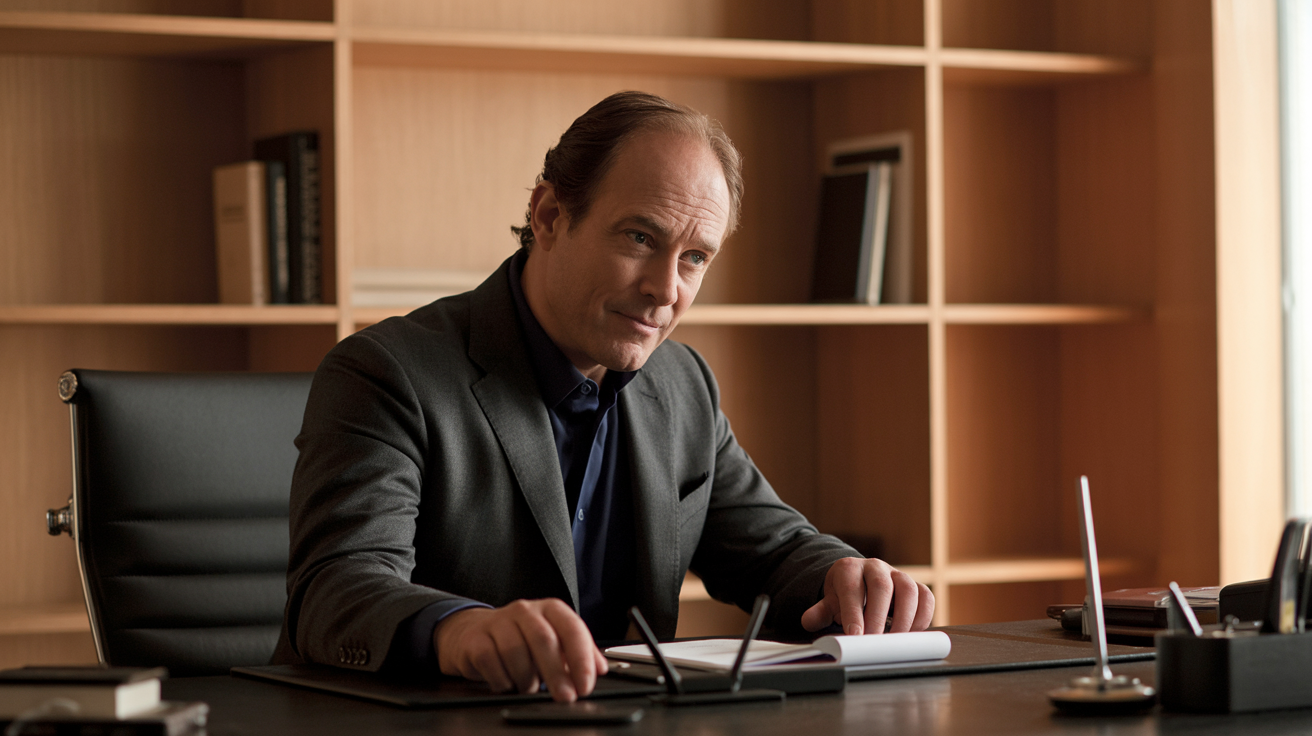
Kyle Milligan is one of the most prolific copywriting educators working today. As Copy Chief at Copy Squad and author of “Take Their Money,” he’s trained thousands of copywriters in direct response fundamentals—the same principles that drove Agora’s billion-dollar publishing empire.
What distinguishes Milligan from other copywriting teachers: he came up through the Agora system, one of the most demanding direct response environments in the world. His teaching isn’t theory—it’s battle-tested methodology refined through high-stakes campaigns where copy performance was measured to the penny.
Understanding Milligan means understanding direct response at its most rigorous: specificity over vagueness, proof over promise, and relentless focus on what actually converts.
Who Is Kyle Milligan
Milligan’s career follows the classic direct response trajectory: learn at an elite shop, build a track record, then teach what works.
He trained at Agora Financial, the publishing arm of Agora Inc.—arguably the most successful direct response company in history. Agora built a multi-billion dollar empire selling financial newsletters, health publications, and investment research through long-form sales letters and email campaigns.
The Agora environment is famously demanding. Copy is tested constantly. Winners get scaled; losers get cut. There’s no room for ego—only what converts. Copywriters who survive Agora emerge with deep pattern recognition for what actually works versus what sounds good in theory.
After Agora, Milligan became Copy Chief at Copy Squad, a training program for direct response copywriters. He also created Email University, focusing specifically on email copywriting, and wrote “Take Their Money”—a book on conversion copywriting principles.
Key insight from his path: Milligan’s teaching credibility comes from the Agora crucible. When he says something works, it’s because he’s tested it in an environment where “works” means measurable revenue, not likes or shares.
His major contributions:
- Copy Squad training — Systematic direct response education
- Email University — Email-specific copywriting methodology
- “Take Their Money” — Core conversion principles book
- Specificity framework — Making claims concrete and believable
- “One Reader” approach — Writing to a single person, not an audience
Building your copy skills—or building your business? If you’re writing for clients, get the free training on frameworks that close. If you’re running your own offers, the diagnostic approach is different—start here.
Core Principles
Specificity Over Vagueness
Milligan’s most repeated teaching: specific details are more believable than general claims.
The principle operates on a simple insight—anyone can make vague promises. Only someone with actual knowledge can be specific.
| Vague | Specific |
|---|---|
| Lose weight fast | Lose 11 pounds in your first 14 days |
| Make more money | Add $2,147 to your monthly income |
| Get better results | Increase your open rates from 18% to 34% |
| We helped clients grow | We helped a SaaS client go from $47K to $89K MRR in 90 days |
Specificity signals expertise. When you cite exact numbers, timeframes, and outcomes, readers assume you’ve actually measured them. Vagueness signals either ignorance or something to hide.
Application: Before publishing any claim, ask: “Can I make this more specific?” Replace “many” with numbers. Replace “soon” with timeframes. Replace “results” with measurable outcomes.
Enter the Conversation in Their Head
This principle traces to Robert Collier, but Milligan emphasizes it as fundamental: your copy must meet readers where they are, not where you want them to be.
Before writing, understand:
- What are they thinking about right now?
- What words do they use to describe their problem?
- What have they already tried?
- What do they believe is the solution?
Your opening line should make them feel like you’re reading their mind.
Wrong approach:
“Today I want to share some tips for writing better blog posts.”
Right approach:
“You’ve published dozens of posts. Good posts. Helpful posts. And your traffic is… fine. But ‘fine’ isn’t paying the bills, is it?”
The second opening enters an ongoing mental conversation. It demonstrates understanding before offering expertise.
One Reader, One Message, One Offer
Trying to appeal to everyone results in appealing to no one. Effective copy maintains focus:
- One reader: Write to a single person with a specific situation
- One message: Communicate one central idea clearly
- One offer: Ask them to do one thing
One Reader in practice:
Before writing, visualize someone specific. Not “entrepreneurs” but “Sarah, a freelance designer in business two years, making decent money but feeling stuck, knowing she needs better marketing but unsure where to start.”
Write to Sarah. Everyone like Sarah also feels spoken to.
One Message in practice:
What’s the ONE takeaway you want readers to remember? Every section should support that single message. Cut anything that doesn’t.
One Offer in practice:
What’s the ONE action you want them to take? Don’t present five options. Give one clear next step.
Proof Over Promise
Claims are cheap. Proof is priceless.
Anyone can promise results. What separates effective copy is demonstration.
Types of proof:
- Testimonials — Other people’s success stories
- Case studies — Detailed walkthroughs of specific results
- Data — Statistics and research supporting claims
- Demonstration — Showing expertise in action
- Credentials — Experience and qualifications establishing authority
The more important the claim, the more proof it needs.
Assertion only:
“This framework increases conversions.”
With proof:
“This framework helped three clients increase conversions by an average of 43%. Client A went from 2.1% to 3.8%. Client B saw cart abandonment drop from 74% to 52%. Client C doubled email signups in six weeks.”
Proof makes claims feel achievable—not theoretical.
Agitate Before You Solve
Good copy doesn’t rush to solutions. It first makes readers feel the full weight of their problem.
This isn’t manipulation—it’s honesty. Real problems have real consequences. Helping people see those consequences clearly motivates action.
Structure:
- Name the problem they’re experiencing
- Show hidden costs they might not have considered
- Help them see where this leads if nothing changes
- Then—and only then—introduce the solution
This is PAS in practice, but Milligan emphasizes the “agitate” phase that most copywriters rush through.
Too fast:
“Here are five ways to write better headlines.”
With agitation:
“Every day, great content dies in silence because the headline didn’t do its job. You spend hours writing a post, hit publish, and watch it get ignored—not because the content was bad, but because no one clicked to find out. How many of your best ideas have disappeared into the void for this reason?”
Now the reader cares about headlines. Now they’re ready for your five tips.
Worked Example: Milligan-Style Sales Email
Here’s a cold email selling a copywriting course, applying Milligan’s principles:
Subject: Your $3,247 email problem
You sent 47 emails last month.
Open rates averaged 22%. Click rates around 1.8%. Revenue generated: $847.
Here’s what those numbers actually mean:
You have an audience that’s listening—22% is solid. But between opening and clicking, 91% of them disappear. They were interested enough to open. Something in the email lost them.
That gap—between openers and clickers—is where the money hides.
(SPECIFICITY: Exact numbers make the problem concrete)
I watched this pattern for three years at Agora. We’d test hundreds of emails monthly. Same list, same offer, wildly different results. The difference was never the product. It was always the copy between subject line and CTA.
The emails that converted shared specific patterns. The emails that flopped shared different patterns. Once you see these patterns, you can’t unsee them.
(PROOF: Agora credentials + pattern recognition)
You’re not sending bad emails. You’re sending emails that work well enough that you don’t realize they could work much better.
That 1.8% click rate? I’ve seen the same audience hit 7% with different copy structure. Same list. Same offer. Different approach to the middle of the email.
What would 7% instead of 1.8% mean for your revenue next month?
(AGITATION: Hidden cost made visible)
I put everything I learned into a training called Email University. It’s the system I wish someone had handed me before I spent three years learning it the hard way.
47 lessons. Each one focused on a specific pattern that moves readers from open to click. You can implement the first lesson today and see the difference by tomorrow.
(ONE MESSAGE: Improve the middle of your emails)
Here’s the link: [Link]
First lesson covers the “curiosity gap” technique—the one change that took a client’s click rate from 2.1% to 4.7% in a single test.
(ONE OFFER: Clear next step with specific proof)
Try it. If your click rates don’t improve within 30 days, email me and I’ll refund you plus send you a $50 Amazon card for wasting your time. I’ve made that offer to 2,000+ students. I’ve sent exactly three cards.
(RISK REVERSAL with specific proof)
That’s approximately 350 words. Every Milligan principle appears: specificity, entering the conversation, one reader/message/offer, proof, agitation, and strong CTA.
Are you writing copy for clients, or running your own offers? The answer changes which frameworks matter most. Get the free training tailored to your situation.
When NOT to Use Milligan’s Approach
Milligan’s direct response methodology fails in specific contexts. Understanding these prevents misapplication.
Don’t use hard specificity when you don’t have real data.
Milligan’s specificity principle requires actual numbers. Making up “$2,147” or “14 days” when you haven’t measured these destroys credibility when questioned.
If you don’t have specific data, focus on qualitative specificity (concrete details, sensory language) rather than fabricated statistics.
Don’t use aggressive agitation for sophisticated B2B buyers.
Enterprise buyers have been marketed to constantly. Heavy-handed agitation reads as manipulation.
For sophisticated audiences, use logical consequence (“this inefficiency costs approximately $X per quarter”) rather than emotional agitation. See direct response for B2B for adaptation.
Don’t use “one reader” too narrowly for broad products.
Writing to “Sarah the struggling freelancer” works when Sarah represents your actual market. If your product serves diverse segments, one narrow avatar can alienate others.
For broad products, create multiple “one reader” versions for different segments rather than forcing one avatar onto everyone.
Don’t use his style for brand awareness content.
Milligan teaches conversion copy—content designed to drive immediate action. Brand awareness content has different goals (recognition, recall, positioning).
If you’re writing for awareness rather than conversion, softer approaches work better. Apply Milligan when you need response, not when you need presence.
Don’t use Copy Squad tactics without the underlying thinking.
Some students copy Milligan’s techniques (specific numbers, agitation phrases) without understanding why they work. The result is manipulative-feeling copy that technically follows formulas but lacks authenticity.
Learn the principles deeply enough to apply them naturally. Superficial application of his tactics backfires.
The Agora Influence
Understanding Milligan requires understanding Agora’s methodology:
Relentless testing: Nothing is assumed. Everything is measured. Copy that doesn’t perform gets killed regardless of how good it “sounds.”
Long-form dominance: Agora built their empire on long-form sales letters—3,000-10,000 words that tell complete stories and overcome all objections.
Financial and health markets: These niches require specific proof, credibility signals, and sophisticated persuasion because readers are highly skeptical.
Speed of iteration: Agora copywriters often test multiple versions weekly. This rapid feedback accelerates learning dramatically.
Milligan’s teaching carries this DNA: measurable, specific, proof-driven, and focused on what actually converts rather than what feels creative.
Related Practitioners
Ben Settle — Different approach to email. Settle emphasizes daily consistency and personality; Milligan emphasizes conversion mechanics. Both work—different models.
Frank Kern — Kern’s casual style contrasts with Agora’s more formal direct response. Milligan sits between them—direct but not stiff.
Clayton Makepeace — Agora legend and likely influence on Milligan’s development. Similar conversion focus.
Ryan Deiss — Deiss focuses on journey architecture; Milligan focuses on conversion mechanics. Complementary—use Milligan’s copy within Deiss’s framework.
PAS Formula — The structure underlying much of Milligan’s agitation approach.
The Bottom Line
Kyle Milligan’s contribution is translating elite direct response methodology into teachable systems. What Agora-trained copywriters learn through years of high-stakes testing, Milligan codifies into principles anyone can apply.
His core insight: conversion comes from specificity, proof, and emotional truth—not cleverness.
The principles work because they’re based on what humans actually respond to, not what marketers imagine they respond to. Specificity signals expertise. Proof builds trust. Agitation motivates action. One clear offer enables decision.
Apply Milligan’s approach when you need measurable response—when the goal is clicks, signups, and sales rather than impressions or brand awareness. His methodology is direct response at its purest.
For practitioners willing to test, measure, and optimize, these principles compound. Each email, each sales page, each campaign builds pattern recognition that eventually becomes intuitive.
That’s the path Milligan walked. That’s what he teaches others to walk.
Ready to apply direct response principles to your content? Get the free training to learn conversion frameworks—including when to use Milligan’s aggressive approach and when to soften.

About the Author
John Fawkes is a veteran copywriter with over 15 years of experience helping businesses turn attention into action through clear, persuasive writing. He writes about copy, psychology, and what actually moves people to buy.
Want More Posts Like This?
Get the free training that shows you how to write blog posts that rank AND convert.
Get the Free TrainingContinue Reading
Ben Settle's Copywriting Method: Daily Emails, Print Newsletters, and Infotainment
Ben Settle built a 7-figure business sending one email per day. Here's his complete methodology—and when it backfires.
Frank Kern's Copywriting Methodology: The Complete Breakdown
Frank Kern built a $25M+ business on casual copy and psychological sophistication. Here's how his system works—and when it doesn't.
Star-Story-Solution: The Narrative Framework That Outsells Logic
Star-Story-Solution turns copy into compelling narrative. Here's how the framework works, who uses it, and when to choose something else.